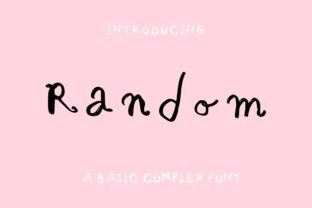
Random: A Fun and Eye-Catching Handwritten Font
Random is an iconic and weird handwritten font with a fun feel, making it an excellent choice for web designers, UI designers, and digital product creators. This Script Handwritten font will easily turn any creative project into an eye-catcher, adding a unique touch to your designs.
Using Random for Creative Website Headers and Hero Sections
Incorporating Random into website headers and hero sections can instantly grab the viewer's attention. The playful and distinctive style of this Script Handwritten font makes it perfect for creating a memorable first impression. Whether you're designing a portfolio site or a boutique online store, Random adds a touch of personality and creativity that stands out.
Random in Landing Pages and Call-to-Action Areas
When it comes to landing pages and call-to-action (CTA) areas, readability and visual impact are crucial. Random, with its fun and quirky design, can be used effectively in these sections to draw attention and encourage user engagement. Use it for short, impactful phrases or as a decorative accent to make your CTAs more appealing and inviting.
Enhancing Readability and Visual Hierarchy with Random
While Random is a decorative and fun font, it's important to use it judiciously to maintain readability. For longer text, pair Random with a clean, simple sans serif font. This combination ensures that the main content remains easy to read while still benefiting from the visual appeal of Random. Use Random for headings, titles, and short, impactful statements to create a strong visual hierarchy.
Random for Online Shop Banners and Product Descriptions
Online shop banners and product descriptions need to be both visually appealing and informative. Random can add a creative and engaging element to these sections. Use it for banner headlines or as a highlight for key product features. However, for detailed product descriptions, opt for a more legible font to ensure that all information is clear and easy to read.
Random in Blog Graphics and Digital Ads
Blog graphics and digital ads often require a font that can stand out and capture attention quickly. Random, with its unique and eye-catching style, is ideal for these purposes. Use it for blog post titles, infographic highlights, and ad headlines to make your content more engaging and shareable. Pair it with a complementary font for body text to maintain overall readability.
Random for Course Pages and Educational Content
For course pages and educational content, Random can add a creative and welcoming touch. Use it for section headings, module titles, and key takeaways to make the learning experience more enjoyable and visually interesting. However, for the main content and instructions, choose a more readable font to ensure clarity and ease of understanding.
Practical Tips for Using Random in Responsive Web Design
When using Random in responsive web design, it's essential to consider how the font behaves on different screen sizes. Ensure that the font size and line height are adjusted appropriately for mobile screens to maintain readability. Test the font on various devices and backgrounds, including dark and light, to ensure it remains legible and visually appealing across all platforms.
Font Pairing and Multilingual Support for Random
To create a balanced and professional look, pair Random with a clean, simple sans serif or serif font. This combination works well for both web and print projects. Additionally, check if Random includes multiple styles, weights, and multilingual support. These features can be particularly useful for international websites and projects that require a diverse range of language options.
Commercial Licensing and Usage for Random
Before using Random in commercial projects, such as client websites, online stores, or digital templates, ensure that you have the appropriate licensing. Commercial font licensing is essential to avoid any legal issues and to support the creators of this unique and valuable typeface. Always check the license terms and conditions to understand the usage rights and restrictions.